How Much Do Google Local Service Ads Cost?
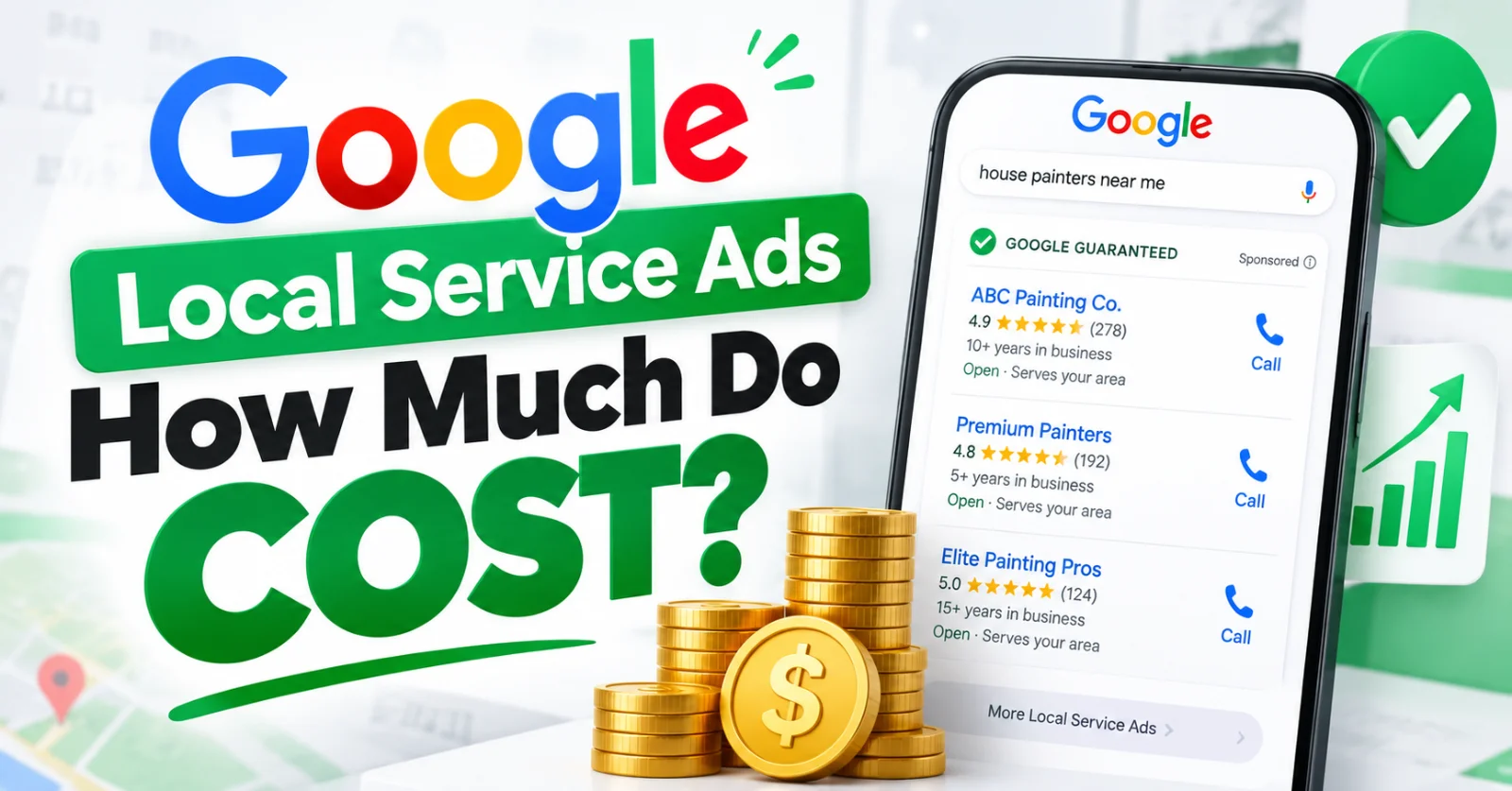
Google Local Service Ads cost is based on a pay-per-lead model, not per click. Prices vary by industry, location, and competition, and businesses set a weekly budget that caps how many leads they receive. There's no fixed platform fee beyond what you pay for leads.
Key takeaways
- Local Service Ads (LSA) use a pay-per-lead model, so you're charged when a potential customer contacts you through the ad — not for clicks or impressions.
- Cost per lead varies by industry, service area, and local competition; trades like plumbing, HVAC, and legal services often see different price ranges than smaller local niches.
- You control spend by setting a weekly budget, which determines roughly how many leads you can receive in that period.
- According to Google's own Local Services Ads support documentation, the separate Google Guaranteed and Google Screened badges have been replaced by a single Google Verified badge.
- Per Google's official guidance, the lead dispute feature has been removed, so businesses can no longer formally dispute and get credited for invalid leads — making it even more important to monitor lead quality and follow up quickly.
If you're a local service business weighing your advertising options, understanding Google Local Service Ads cost is one of the first steps to deciding whether this channel fits your budget. Unlike traditional Google Ads, Local Service Ads (LSAs) use a pay-per-lead pricing model, which changes how you should think about budgeting, bidding, and return on investment.
This guide breaks down how LSA pricing actually works, what factors influence your cost per lead, and how to set a budget that makes sense for your business — including recent changes to badging and lead disputes that every advertiser should know about, based on Google's own published Local Services Ads documentation.
What Is the Google Local Service Ads Cost Model?
Local Service Ads appear at the very top of Google search results, above traditional search ads, often with a verification badge next to your business name. The key difference from standard Google Ads campaigns is pricing: instead of paying per click, you pay per lead.
A lead is typically counted when a customer calls your business directly through the ad, sends a message, or books an appointment. If someone clicks your ad but doesn't contact you, you generally don't pay for that interaction. This makes LSAs appealing to service businesses that want to pay for actual potential customers rather than general traffic.
How Much Does a Lead Actually Cost?
There isn't one universal number here — Google Local Service Ads cost per lead varies based on several factors, and published averages change over time and by market. Rather than quote a specific figure that may be outdated or inaccurate for your area, it's best to think about the variables that move the price:
- Industry: Emergency and high-ticket trades (like plumbing, HVAC, roofing, or legal services) tend to have different lead costs than lower-ticket local services.
- Location: Lead prices in large metro areas with heavy competition are typically higher than in smaller or less competitive markets.
- Seasonality: Demand spikes (storm season for roofers, summer for HVAC) can temporarily raise or lower lead costs.
- Competition in your service area: The more local businesses bidding for the same leads, the higher the price tends to climb.
If you want to include specific average cost-per-lead figures for your industry, pull current numbers from Google's LSA dashboard or a verified industry report rather than estimating.
How Do You Control Your Spend?
Setting a weekly budget
Google lets you set a weekly budget for your LSA campaign. This budget acts as a cap — Google uses it to estimate roughly how many leads you can expect to receive in that period, and once you hit that budget, your ads typically stop showing until the next cycle.
This gives you more predictability than open-ended click-based bidding, since you're setting a ceiling on total lead volume rather than guessing at a cost-per-click bid.
What happened to disputing invalid leads?
In the past, advertisers could formally dispute leads they believed were invalid — spam calls, wrong-service inquiries, or no-shows — and receive a credit if the dispute was approved. Google has since removed the lead dispute feature, and it is no longer an active part of the Local Service Ads platform. This change is documented in Google's official Local Services Ads Help Center, which is the best source to check for the most current policy details. Google states it won't charge you for certain obvious spam calls automatically, but there is no longer a self-service way to flag and dispute questionable leads for a refund.
This makes it more important than ever to monitor your incoming leads closely, respond quickly to catch genuine opportunities, and factor some amount of lead variability into your budget expectations, since you can no longer count on recovering costs from a formal dispute process.
Google Verified Badge and Screening Requirements
Google has introduced a unified Google Verified badge to replace the separate Google Guaranteed and Google Screened badges. Per Google's Local Services Ads support documentation, the Google Guaranteed and Google Screened badges are no longer active or issued — if you see them referenced in older materials, they've been retired in favor of this single verification standard.
To run Local Service Ads, businesses must complete Google's screening and verification process, which may include background checks, business registration verification, license and insurance checks, and other requirements depending on the industry and location.
Existing eligible advertisers who had previously completed the required verification were automatically transitioned to the new badge, while new advertisers must complete the necessary checks before qualifying. These requirements are part of the onboarding process rather than a standard additional fee charged on top of your LSA lead costs. However, businesses may incur their own costs for required licenses, insurance, or documentation.
Is Local Service Ads Cost Worth It Compared to Other Channels?
This is the real question most business owners are asking. Because you're paying for leads instead of clicks, LSAs can produce a more direct, trackable cost per acquisition than some other ad formats. However, "worth it" depends on:
- Your average customer value (a single roofing job may easily justify a higher lead cost than a one-time small repair)
- Your close rate on LSA leads specifically, which you should track separately from other channels
- How well your team follows up on leads quickly, since LSA leads often go to whichever business responds first
Pairing LSAs with solid lead tracking is one of the best ways to actually know your cost per lead versus your cost per customer — which is the number that really matters for your budget decisions, especially now that formal lead disputes are no longer an option.
Tips for Managing Local Service Ads Cost Effectively
- Start with a conservative weekly budget and increase it gradually as you confirm lead quality and close rates.
- Respond to leads immediately. Slow response times waste paid leads that you've already paid for.
- Monitor lead quality regularly to spot patterns of spam or mismatched inquiries — since disputes are no longer available, catching issues early and adjusting your targeting matters more.
- Track leads through to closed jobs, not just initial contact, so you understand true ROI rather than just lead volume.
- Keep your profile complete and your reviews strong, since your ranking among competing LSA ads is influenced by responsiveness and review signals, not just budget.
Final Thoughts
Google Local Service Ads cost is driven by a pay-per-lead model that rewards businesses who respond quickly, maintain strong reviews, and actively manage their budget. The platform has evolved recently — per Google's own Local Services Ads Help Center, the Google Guaranteed and Google Screened badges have been replaced by the single Google Verified badge, and the lead dispute feature has been removed entirely. While exact price-per-lead figures vary by industry and location, the model itself still offers more predictable, trackable spending than many traditional ad formats. If you're unsure what budget makes sense for your business, reviewing your current close rates and customer value is the best starting point before committing ad spend.
Frequently asked questions
Do Local Service Ads cost more than Google Ads (search ads)?
They work differently, so a direct comparison isn't always fair. Traditional Google Search Ads charge per click regardless of whether that click becomes a customer, while LSAs charge per qualified lead. Many service businesses find LSAs deliver a more predictable cost per acquisition because you're paying for actual contacts, not just traffic.
Is there a minimum budget required for Local Service Ads?
Google lets you set your own weekly budget based on how many leads you want to receive, and you can adjust it at any time. There isn't a universal fixed minimum, but your budget needs to be realistic for your industry's typical lead cost in your area to generate meaningful volume.
Can I get charged for a bad lead?
You can be charged for leads that come through your ad, and Google states it won't charge for certain obvious spam calls. However, Google has removed the formal lead dispute feature (confirmed in Google's Local Services Ads Help Center), so there is no longer a self-service way to dispute a questionable lead and request a credit. Because of this, closely monitoring incoming leads and responding quickly matters more than ever.
Is the Google Guaranteed badge still available?
No. Google has replaced the separate Google Guaranteed and Google Screened badges with a single, unified Google Verified badge. Businesses that previously held the older badges were transitioned automatically if they met verification requirements; new advertisers now go through the Google Verified screening process instead.
What industries use Local Service Ads?
LSAs are available to a range of local service businesses, including home services like plumbing, HVAC, electrical, and cleaning, as well as professional services such as lawyers, financial advisors, and real estate agents, among others, depending on your location.
Want this handled for you?
Iron Lead Agency runs SEO, Google Ads, Local Service Ads, and Google Business Profile management for businesses and agency partners, with a dedicated manager and plain-English reporting.
📅 Schedule a Call